61 acres under permanent conservation easement. A Ducks Unlimited partnership. A working farm in active stewardship. This land was meaningful 170 years ago — and will be protected for the next 170.
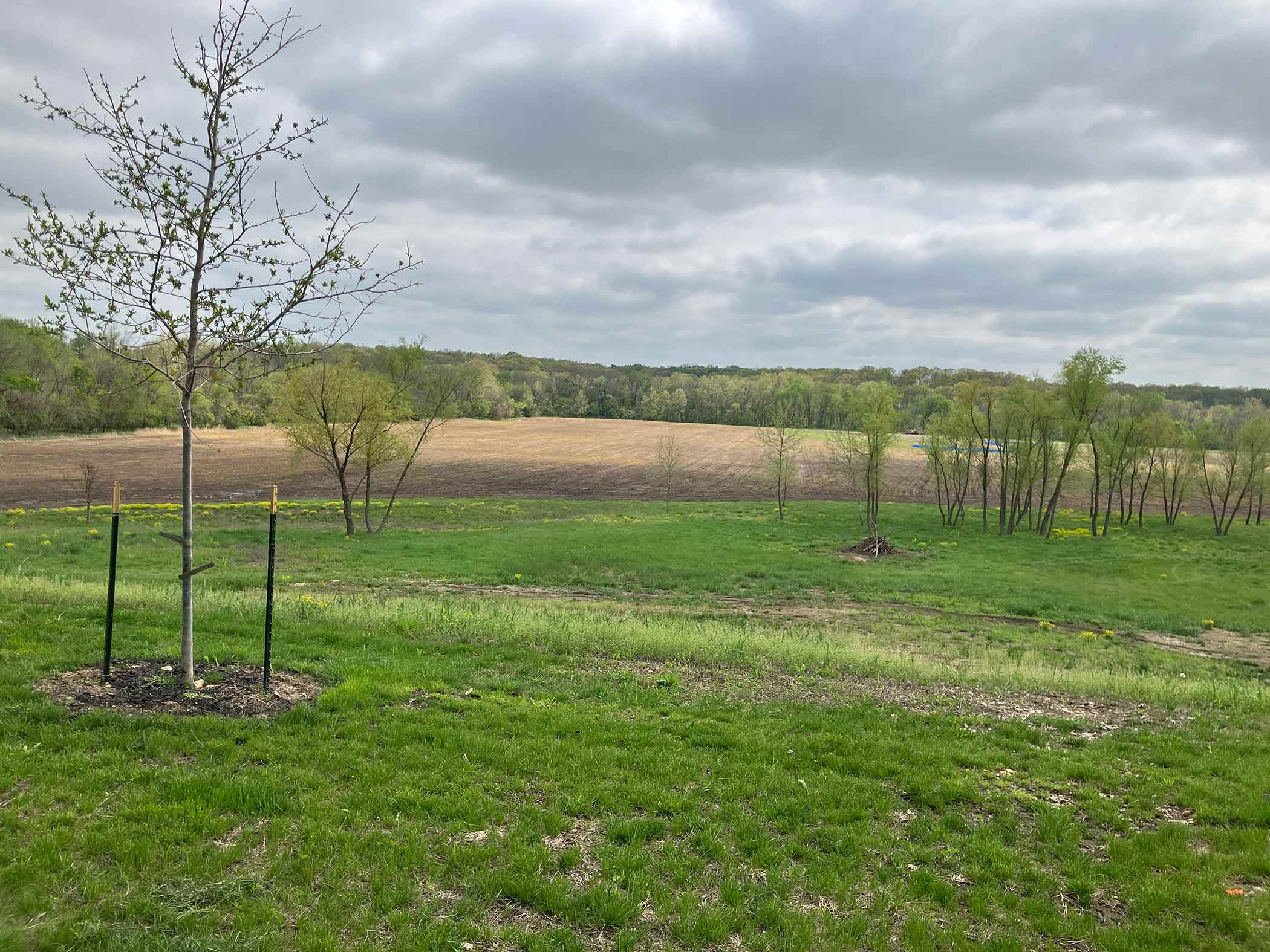
The conservation easement covering 61 acres of Red Bird Ranch was established in partnership with Ducks Unlimited — one of North America's most respected wetland conservation organizations. The easement is permanent. It does not expire with a sale, a generation, or a change of use.
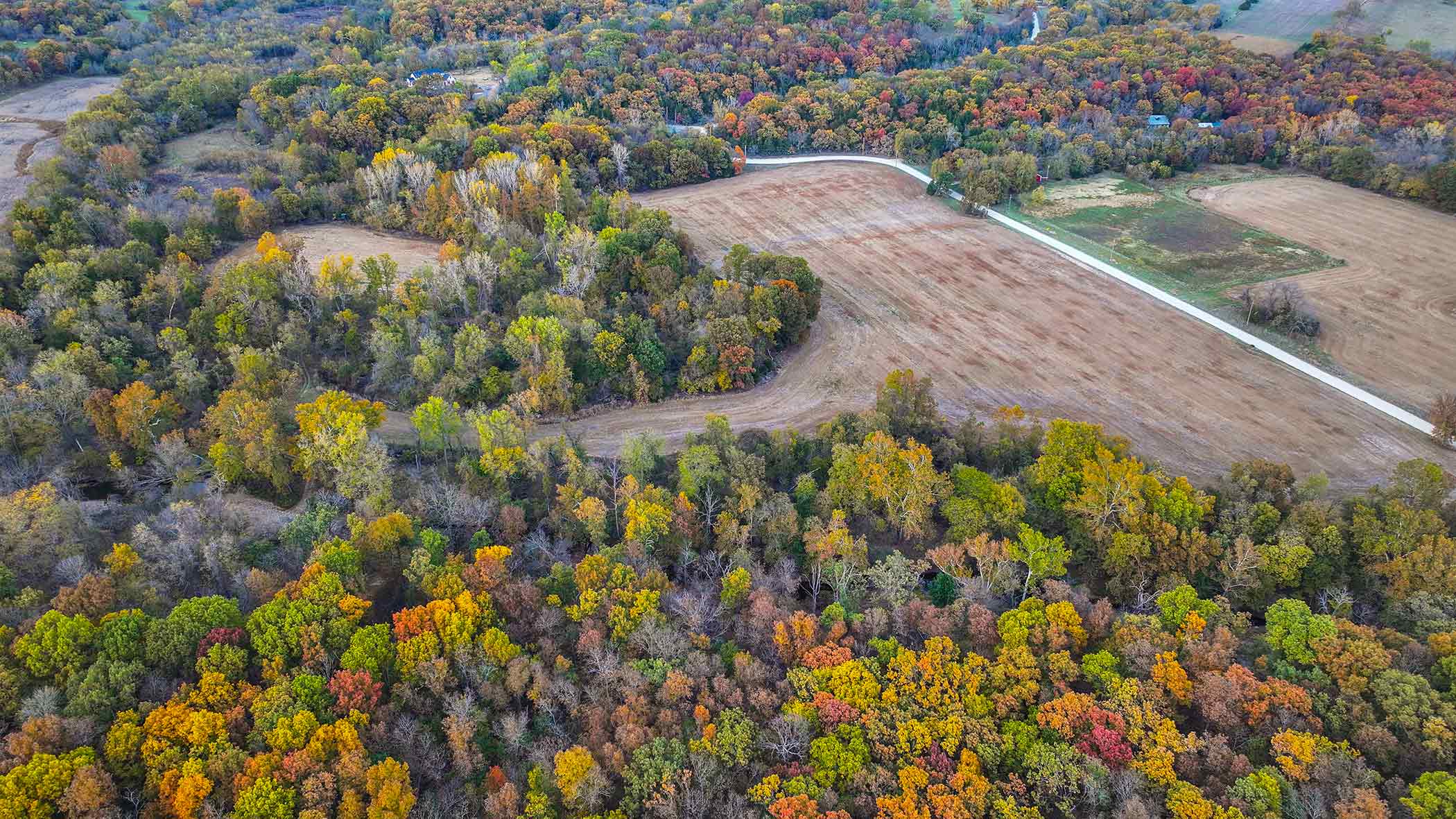
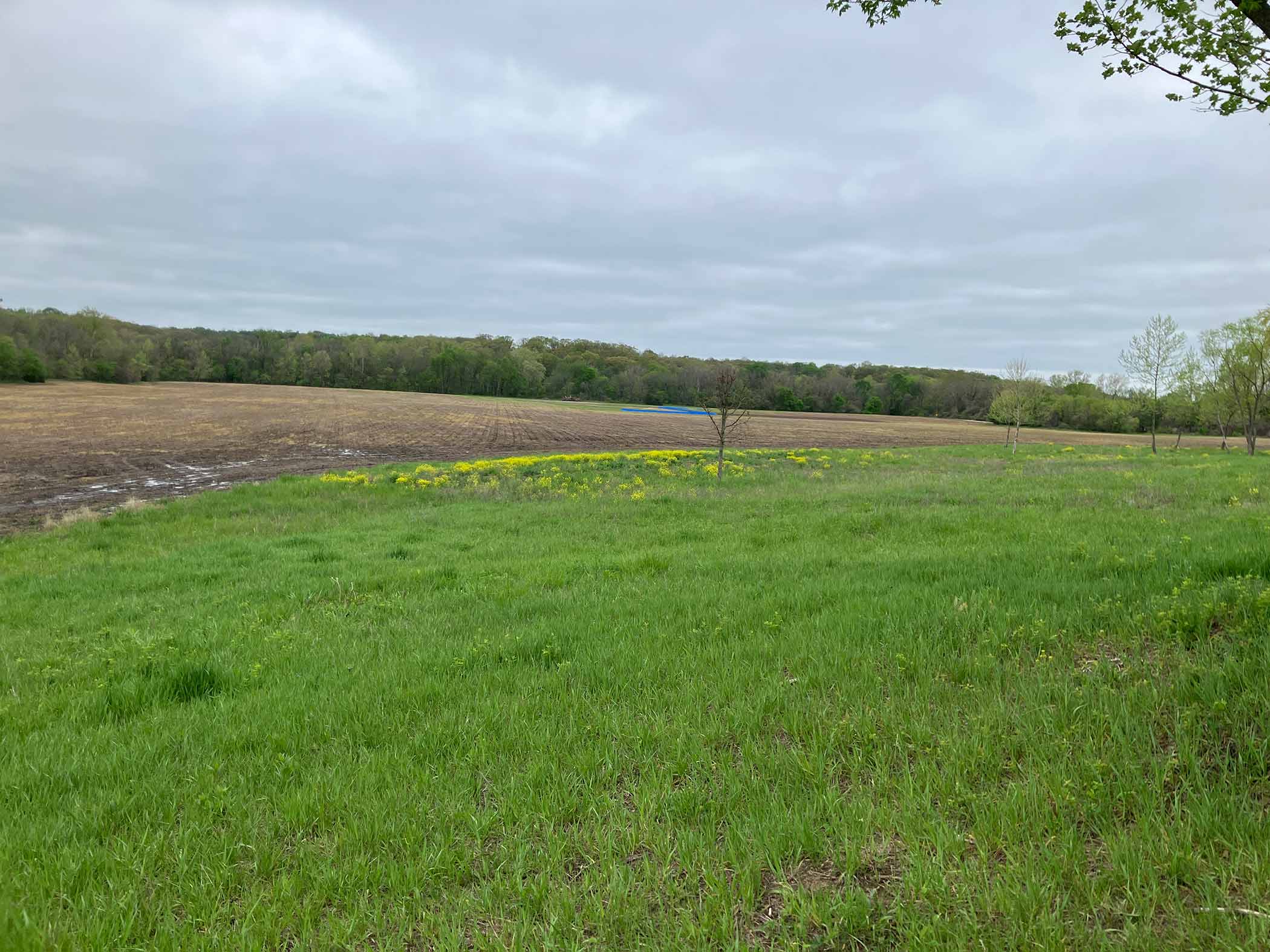
What this means in practice: 61 acres of native grassland, wetland, and habitat corridor will never be developed, drained, or converted to row crops. The wildlife that depends on this land — migrating waterfowl, whitetail, turkey, and the species you never see but that depend on habitat corridors — have a permanent home here.
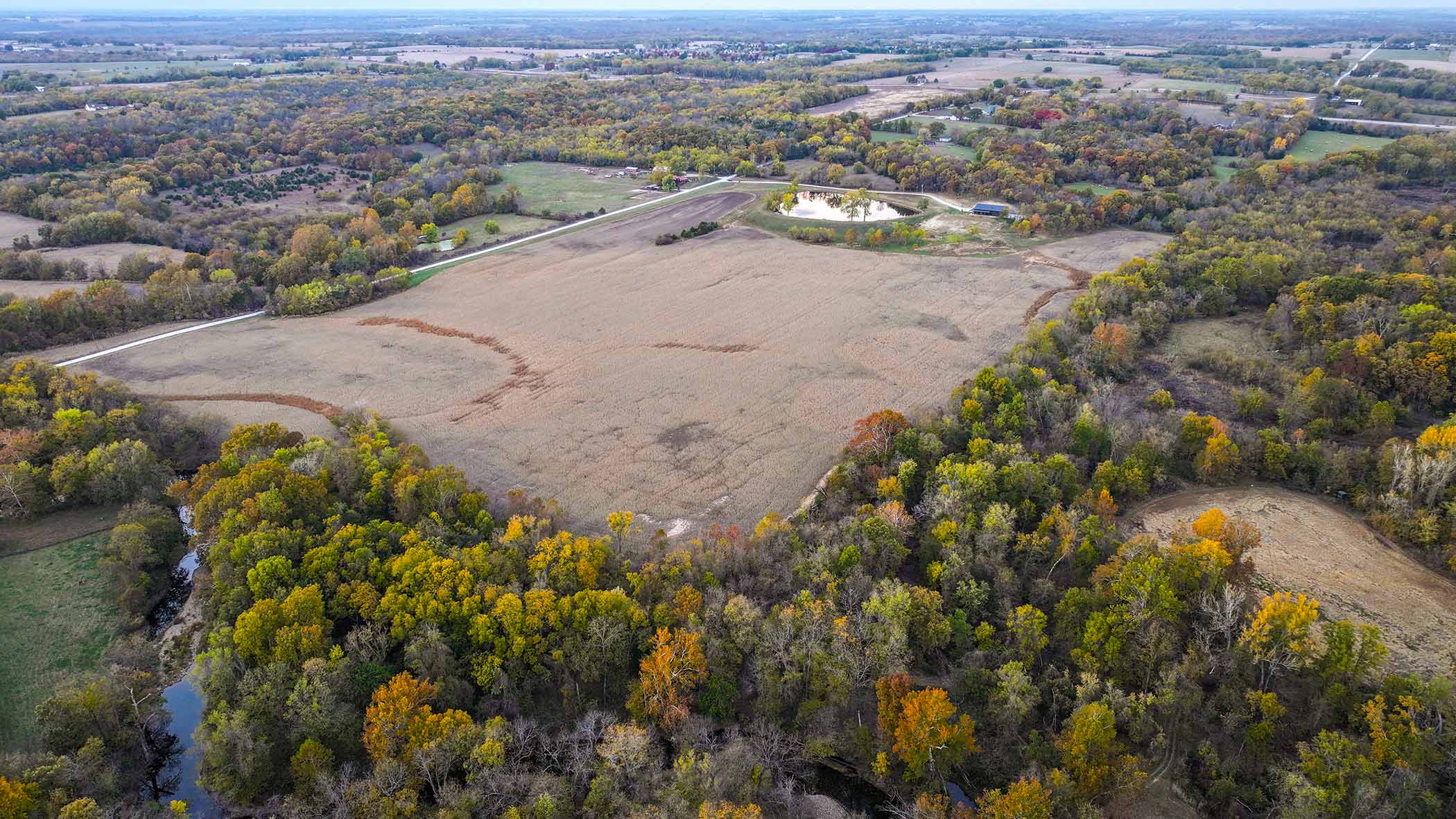
The remaining 39 acres operate as a working farm, with active planting, soil management, and conservation practices that support the easement land around them. The two parts of the property are designed to work together.
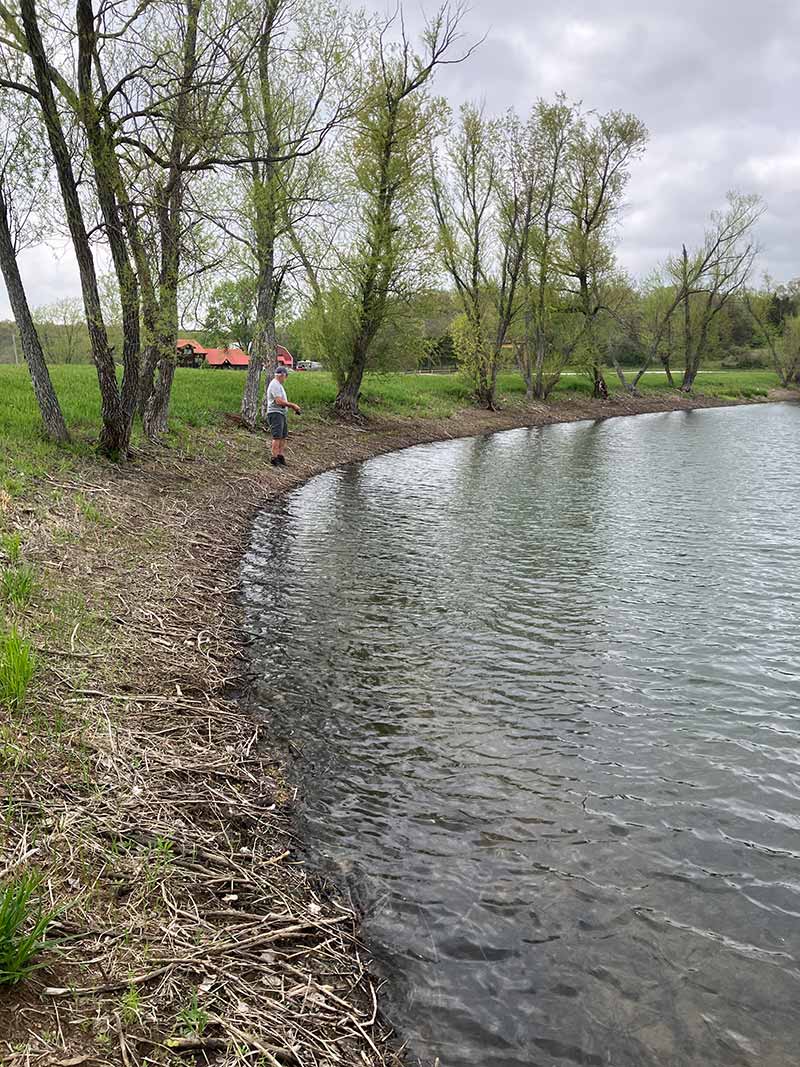
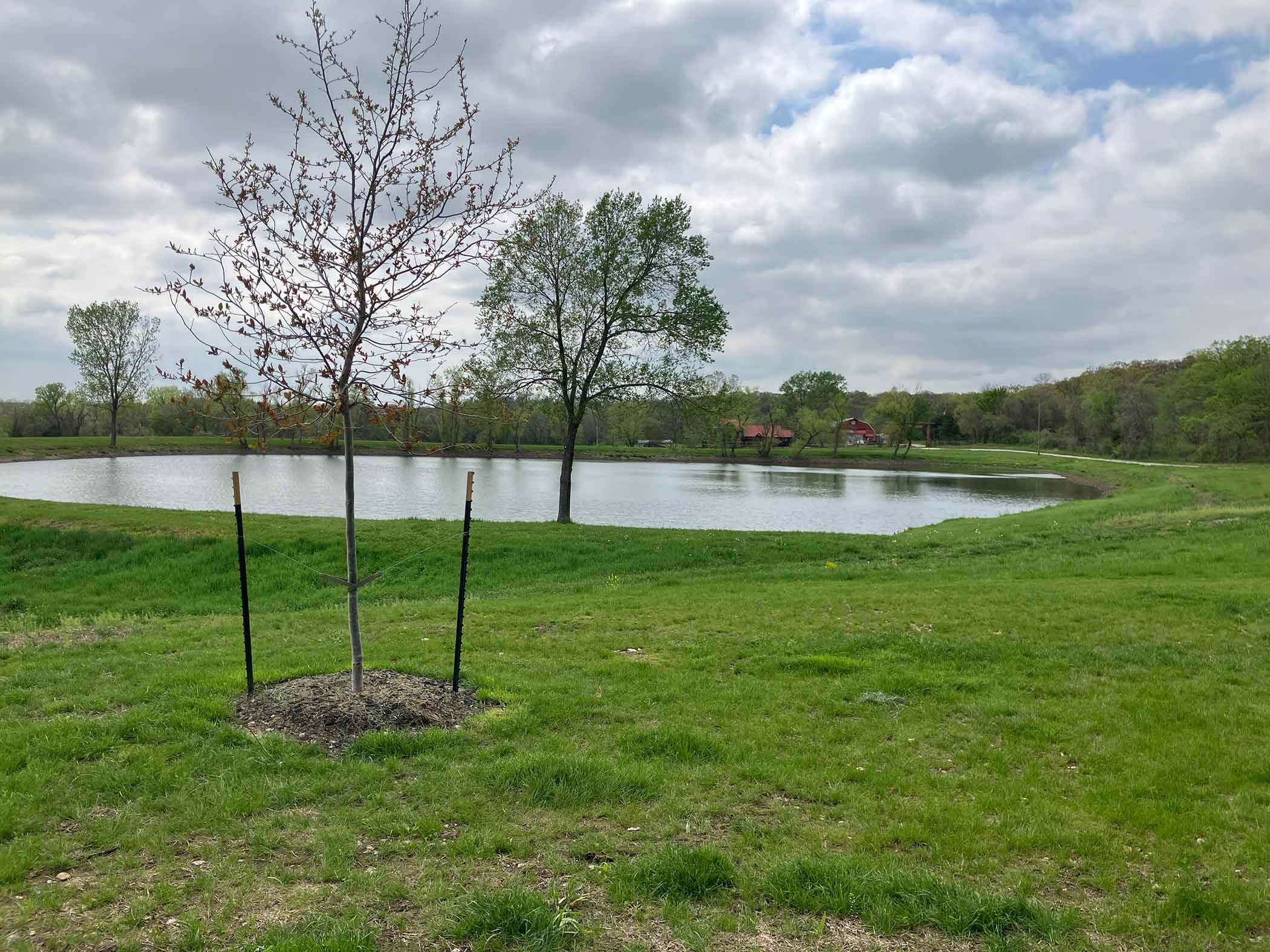
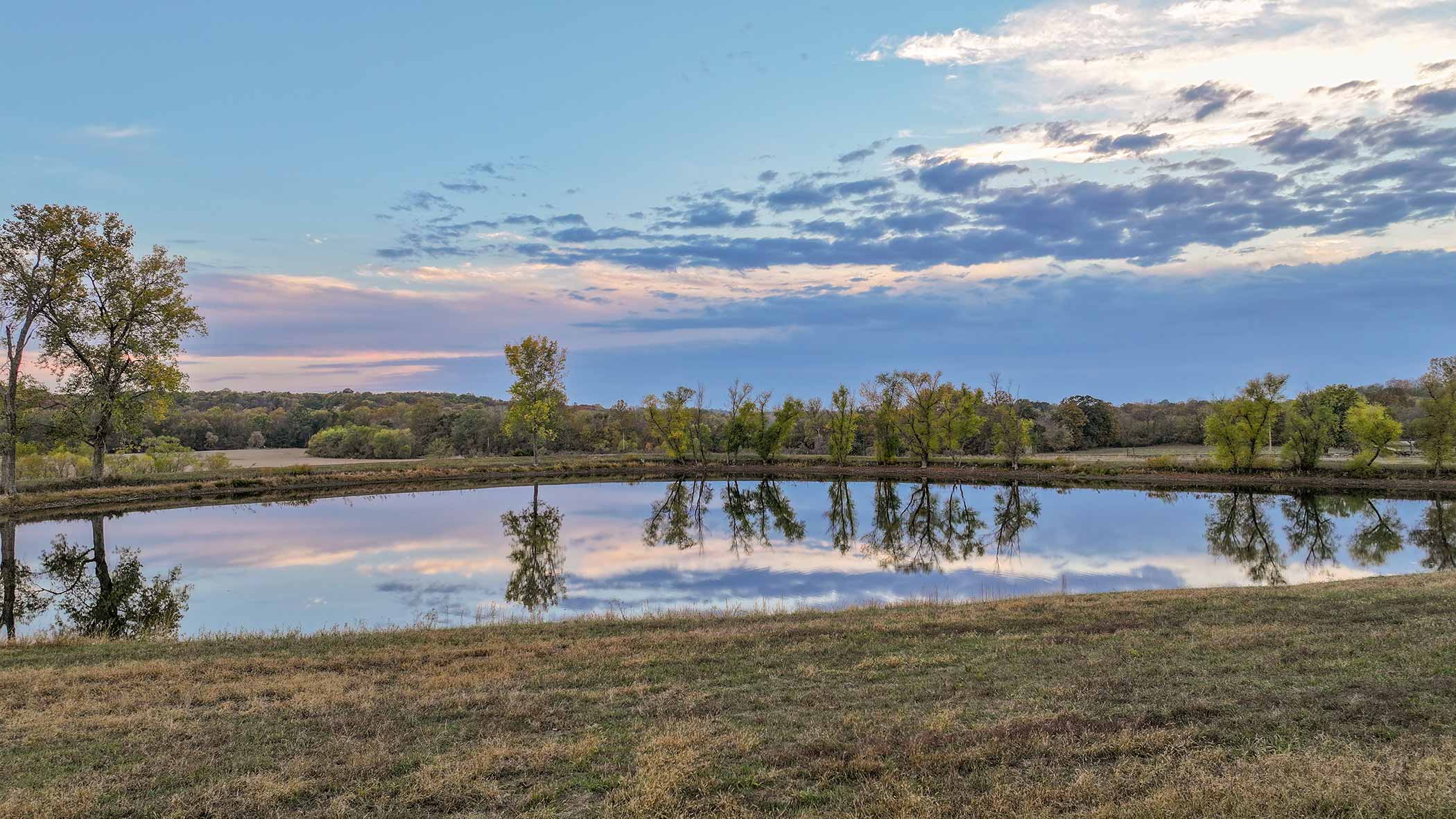
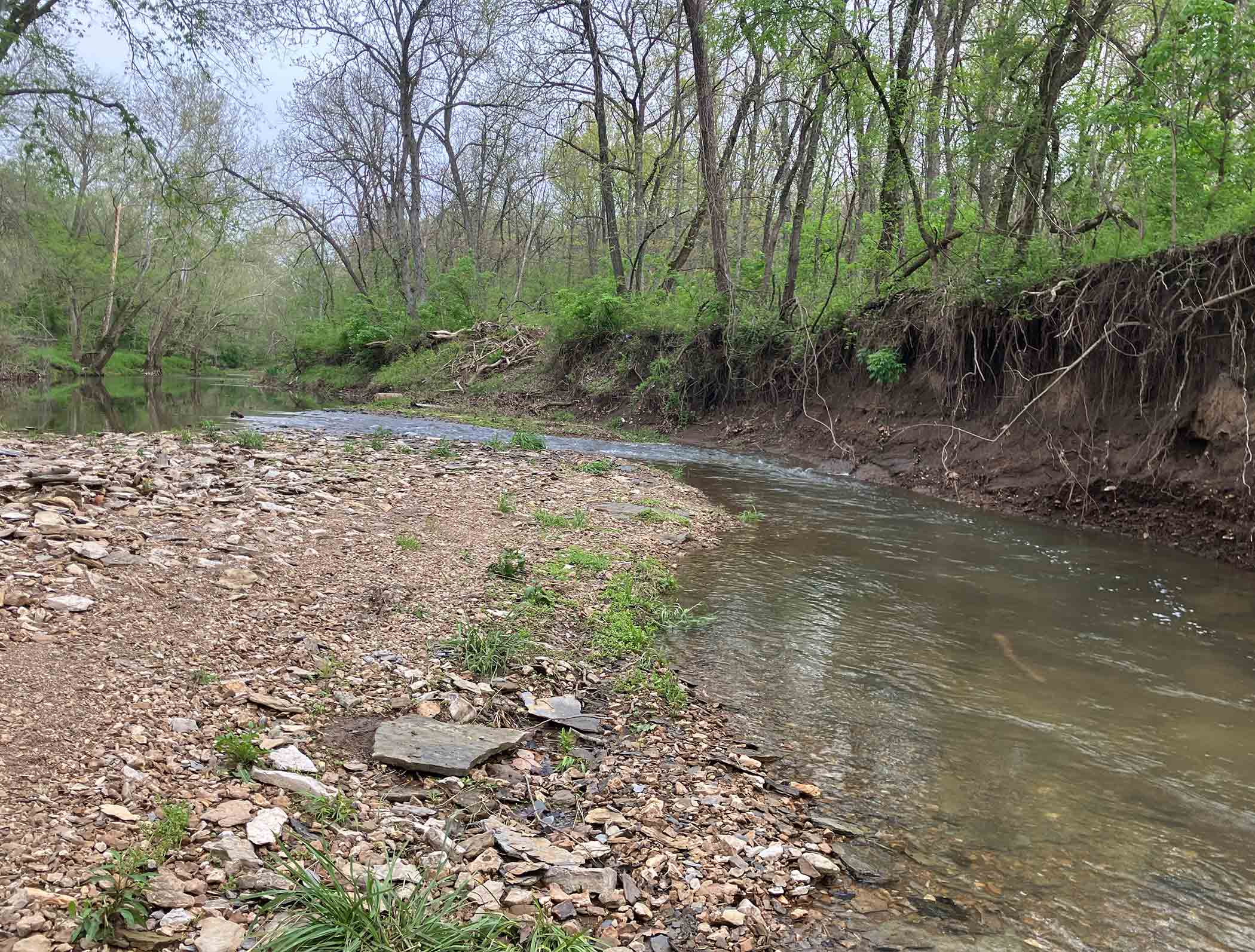
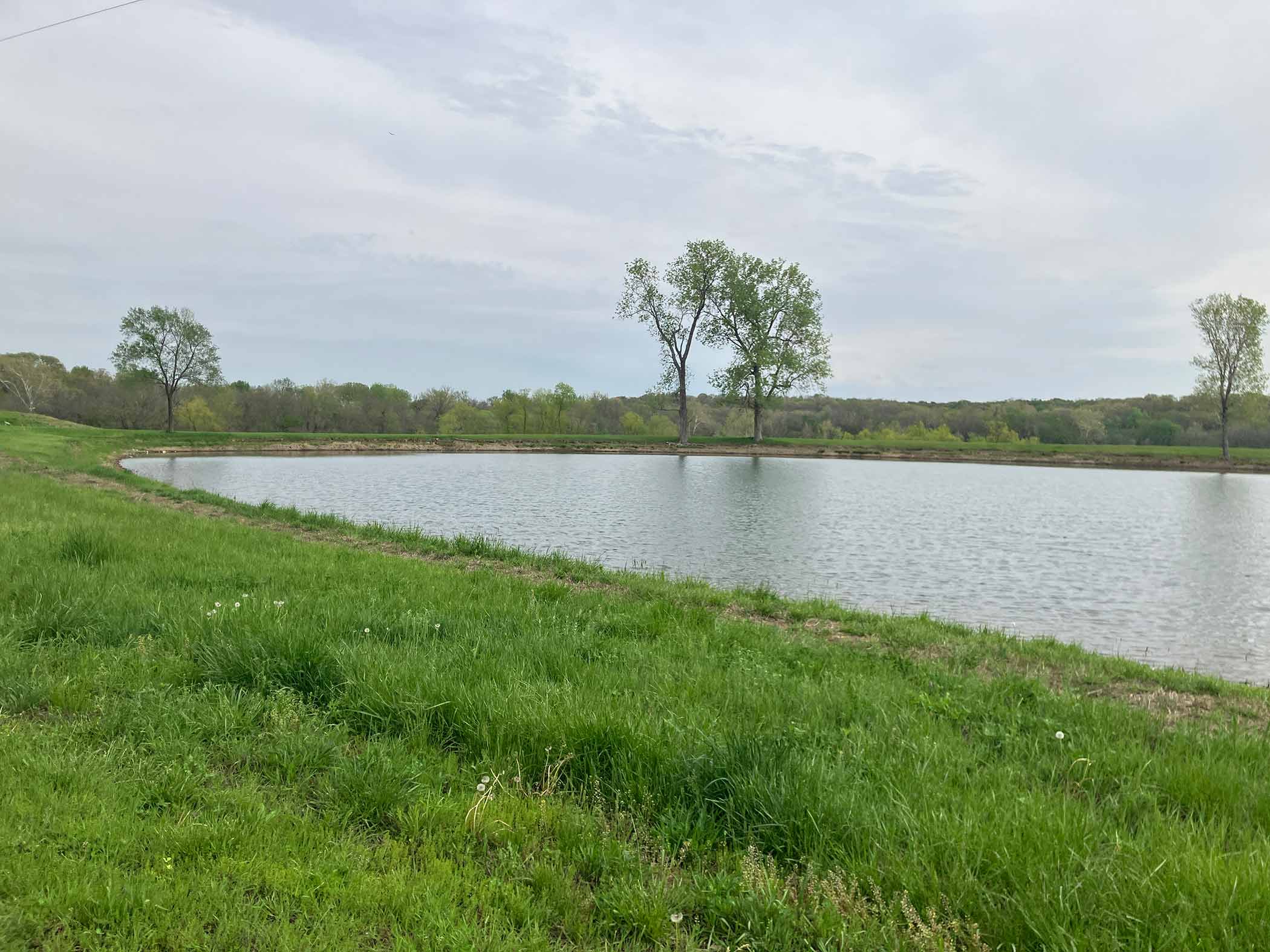
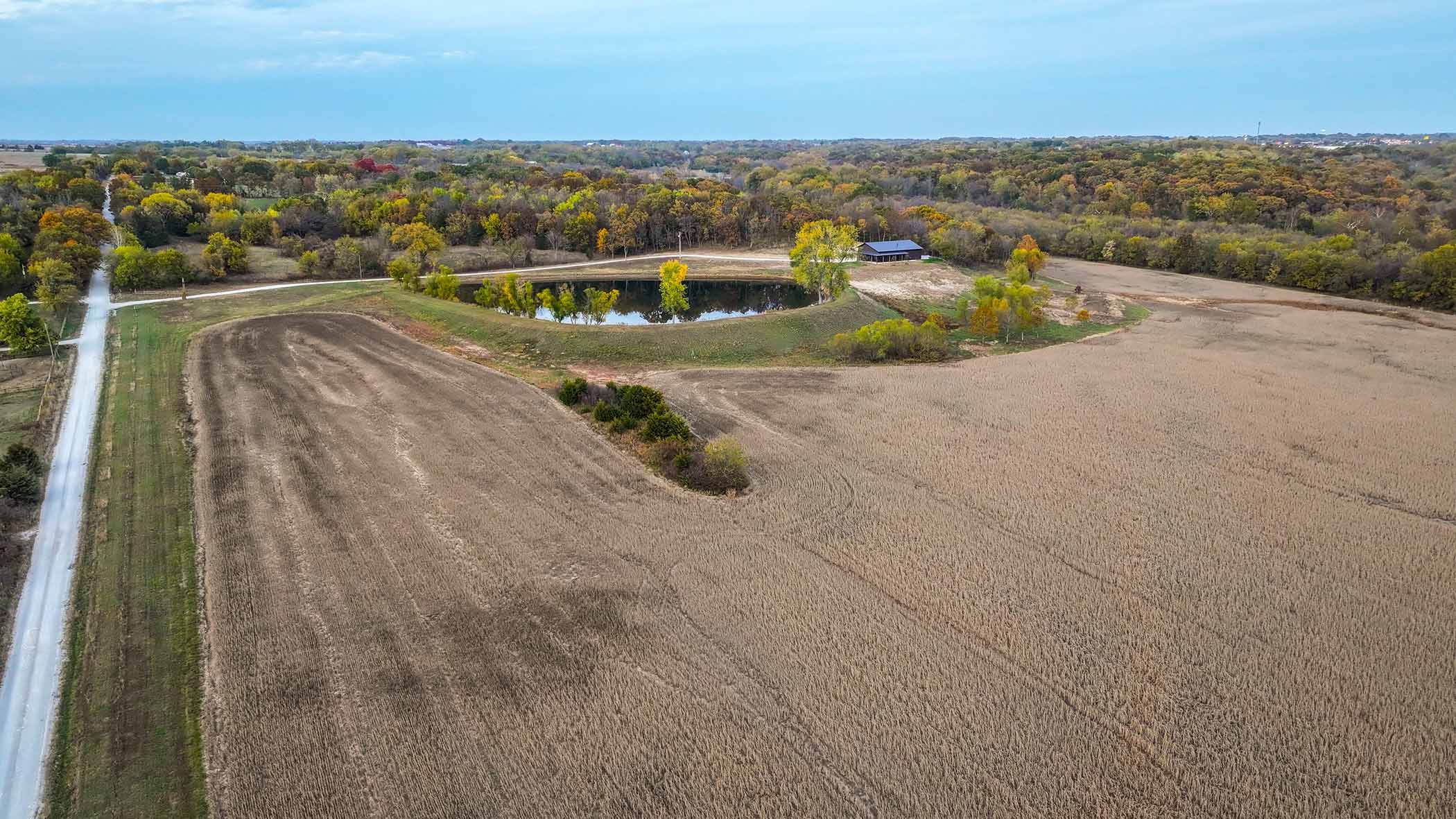
The 3-acre lake is stocked and managed for fishing. The creek and smaller pond feed the conservation wetland, supporting the migratory species the easement was designed to protect. These aren't decorative water features — they're working parts of a functioning ecosystem.
3 acres, stocked with bass and catfish. Full fishing gear provided for guests.
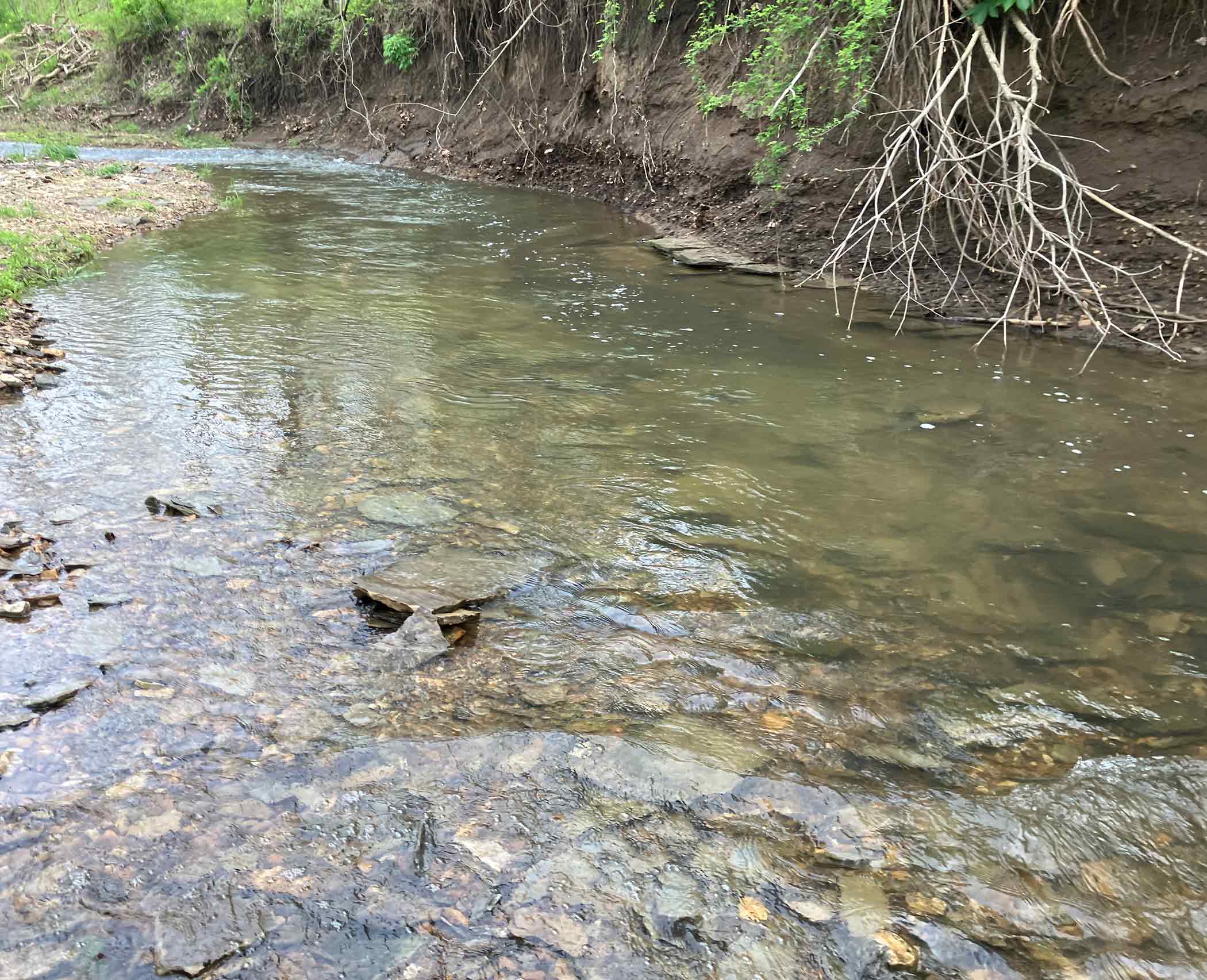
A natural limestone creek running through the eastern conservation land — habitat for songbirds and native species.
A smaller pond adjacent to the conservation easement, supporting wetland habitat and waterfowl staging.
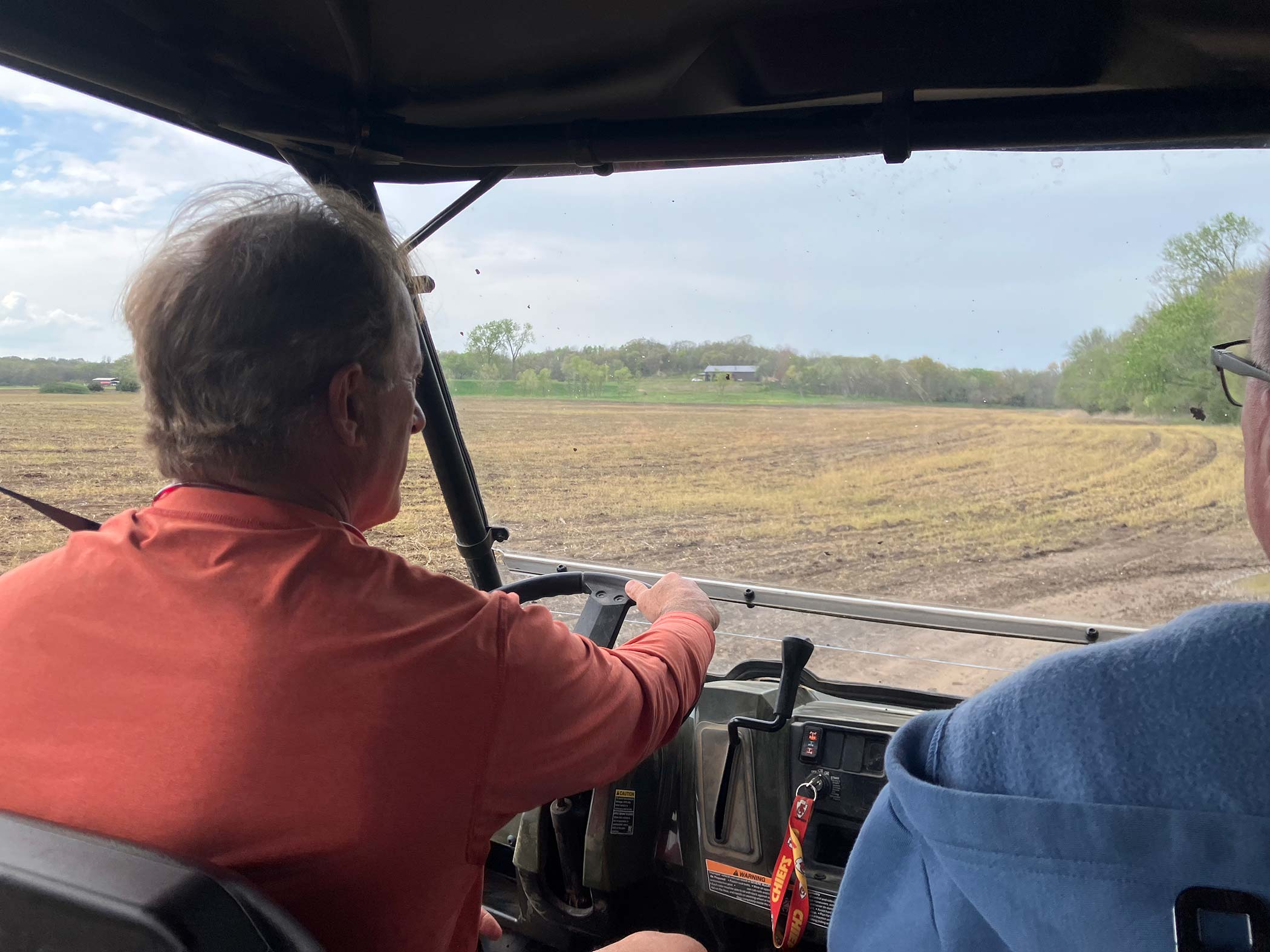
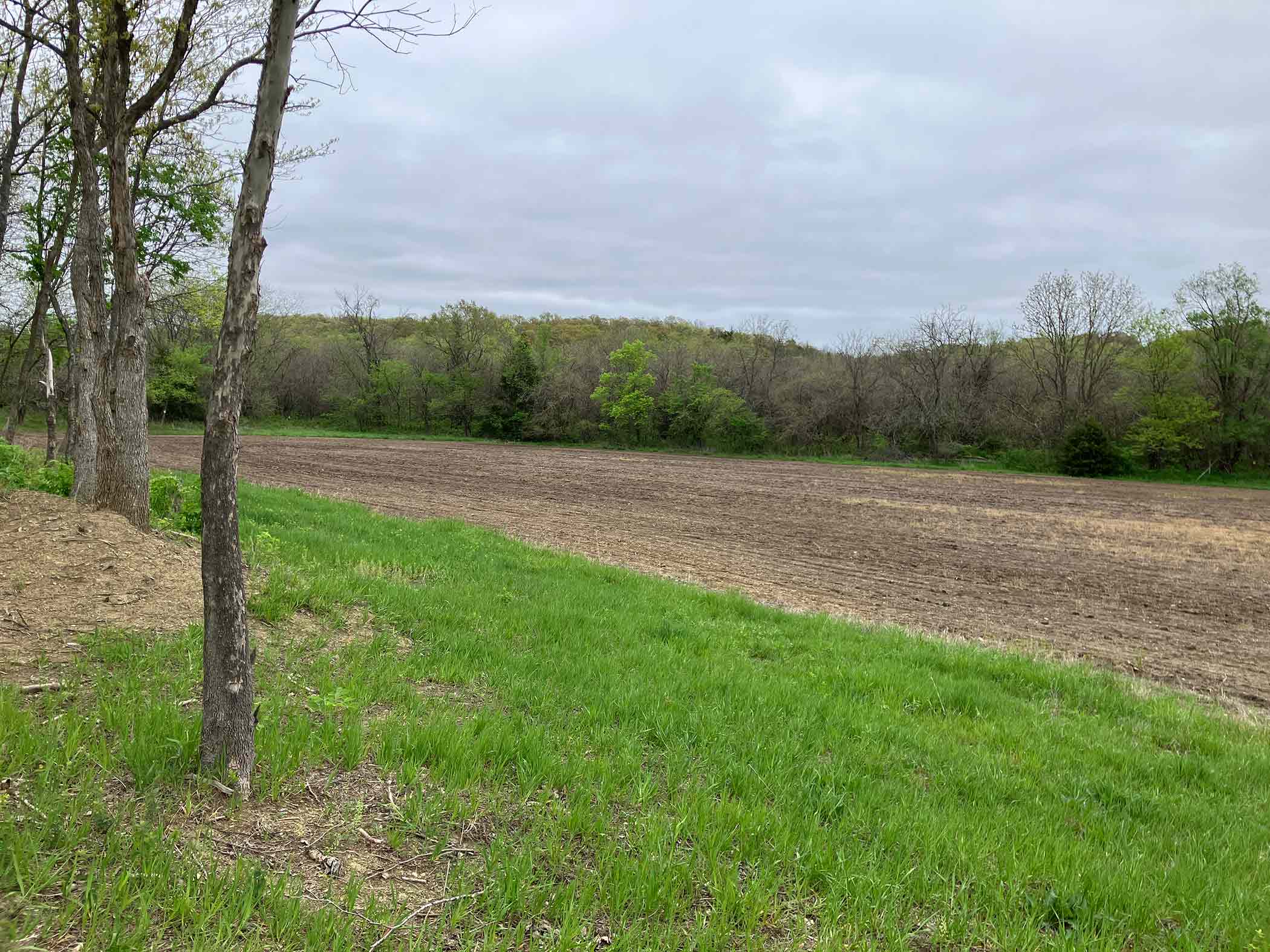
The 39 acres outside the easement are actively farmed — tilled, planted, and managed with practices that support the conservation land surrounding them. Cover crops build soil health. Native plantings provide habitat corridors. The field edges that look wild are wild by design.
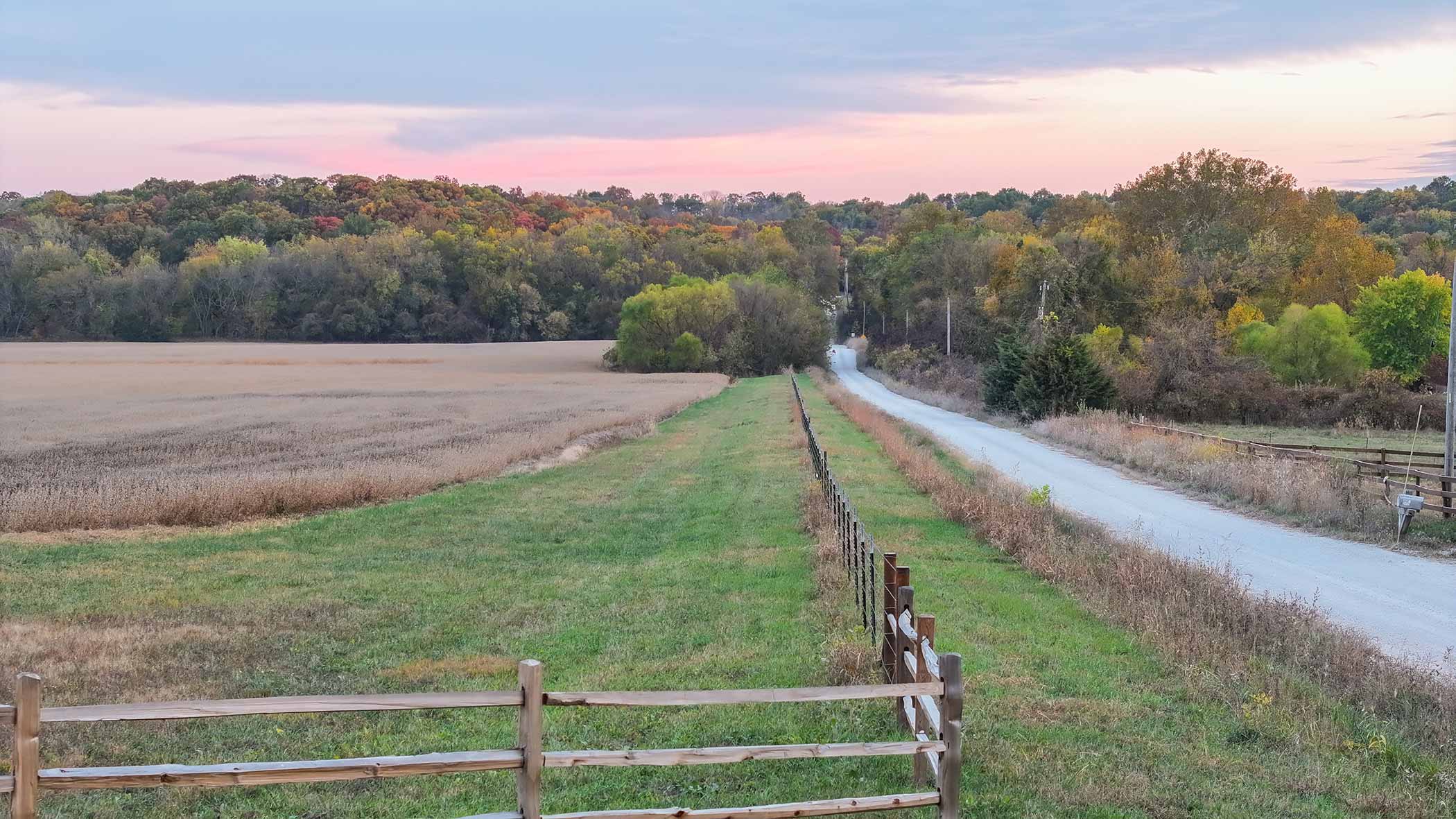
This is a working piece of Kansas land, not a preserved museum. The soil is turned. The wildlife corridors are maintained. The native wildflowers are here because someone planted them, not because no one got around to clearing them.
The working farm and the conservation easement are two halves of the same philosophy: that land can be productive and protected simultaneously — and that stewardship is something you do, not something you declare.
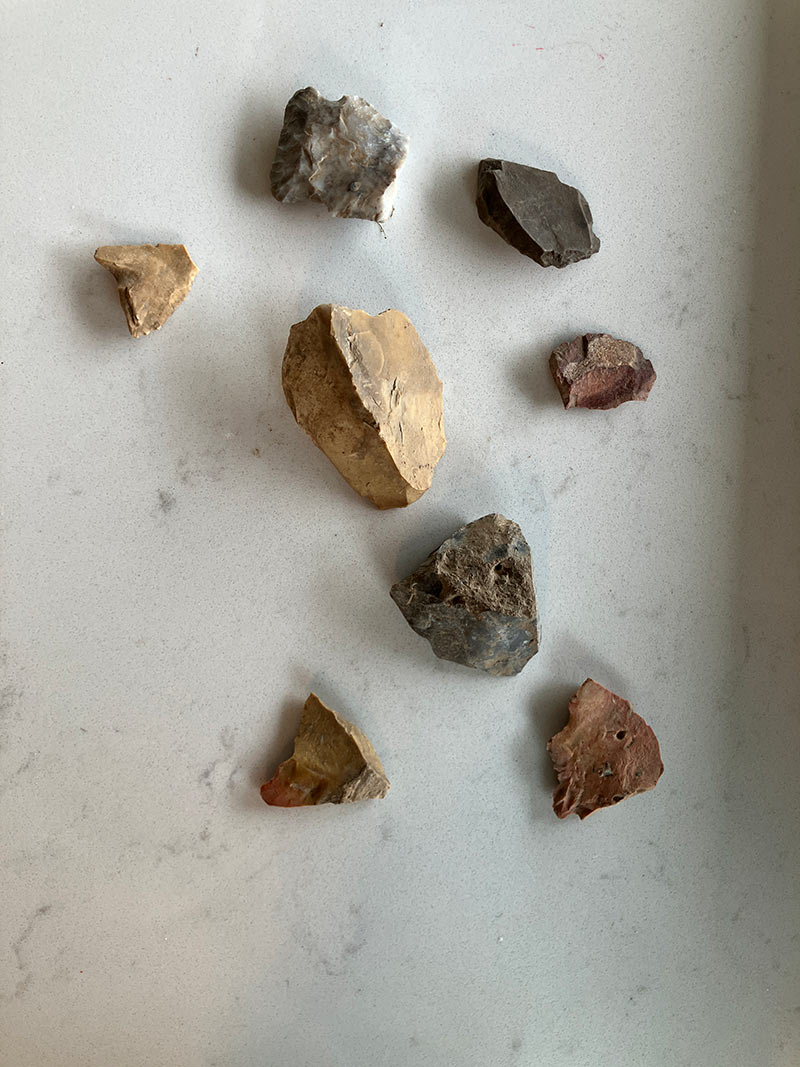
The flint tools in this photograph were found on the property. They predate the 1854 land grant by centuries — evidence that this piece of Kansas land has been meaningful, used, and valued by people for far longer than any title document records.
The Ducks Unlimited easement is the latest chapter in a very long story. Conservation here isn't an environmental position. It's a recognition that this land has always had value beyond its yield, and a commitment to ensuring it always will.
Wea Nation and other indigenous peoples use this land. Flint tools and arrowheads found across the property.
President James Buchanan signs the land grant conveying this property to Kinge Toh No Zah — "Red Bird" — of the Wea Nation.
Red Bird Ranch operates as a luxury private retreat with 61 acres under permanent Ducks Unlimited conservation easement.
The conservation easement is permanent — it runs with the land, not the owner. This land will be protected in perpetuity.
Red Bird Ranch hosts one private group at a time on 100 acres of working and conservation land 30 miles from Kansas City.
Begin Your Inquiry