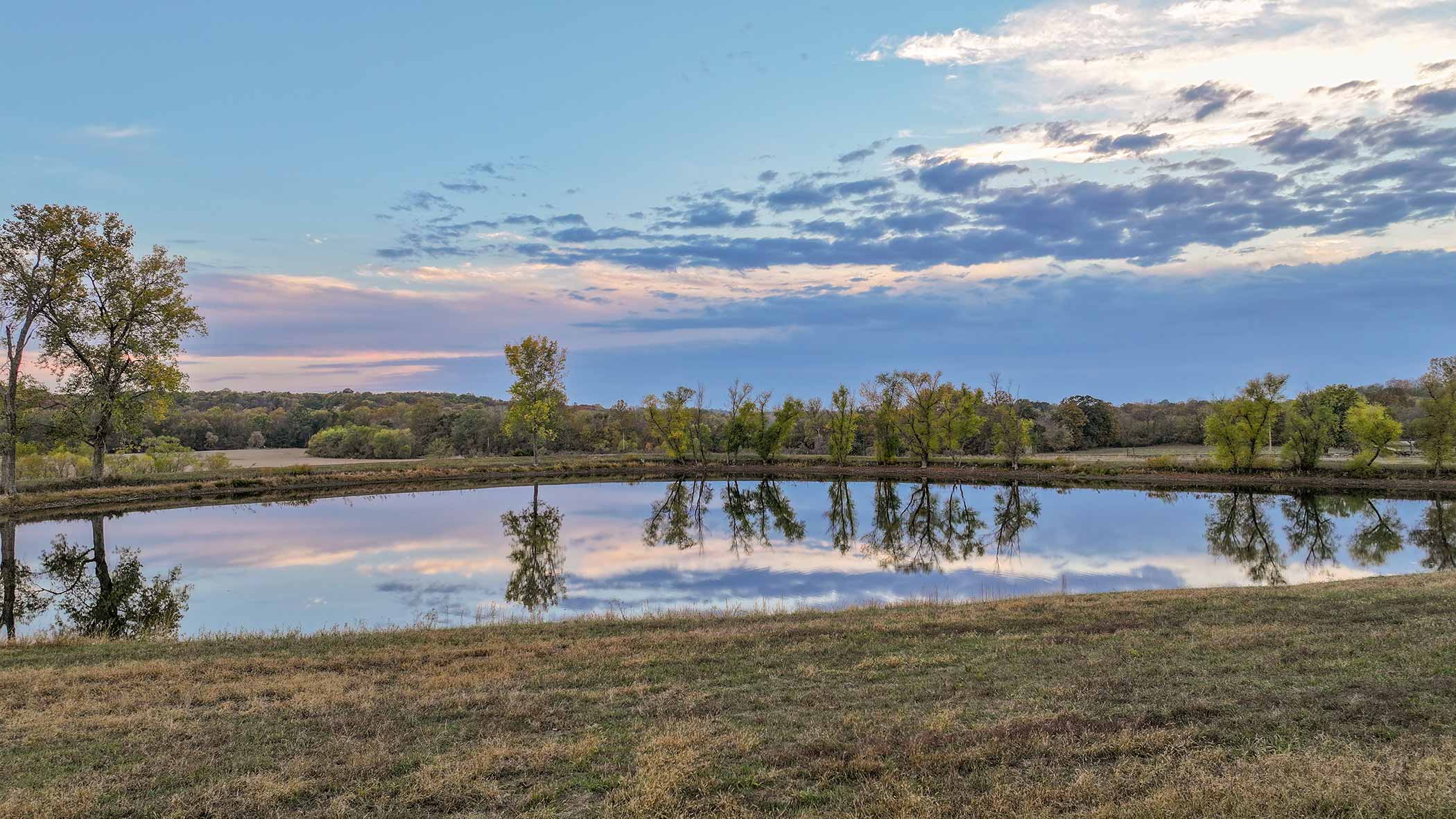
Est. 1854 · Louisburg, Kansas
The name Red Bird
"Most properties have an address. This one has a name that was earned — by a man, by a nation, and by a piece of land that has held that name for 170 years."
Red Bird Ranch takes its name not from a marketing exercise, but from history. In 1854, President James Buchanan signed a federal land grant conveying this ground to Kinge Toh No Zah — a name that translates to "Red Bird" — of the Wea Nation. The original document still exists. The name has never changed. And the land itself remembers.
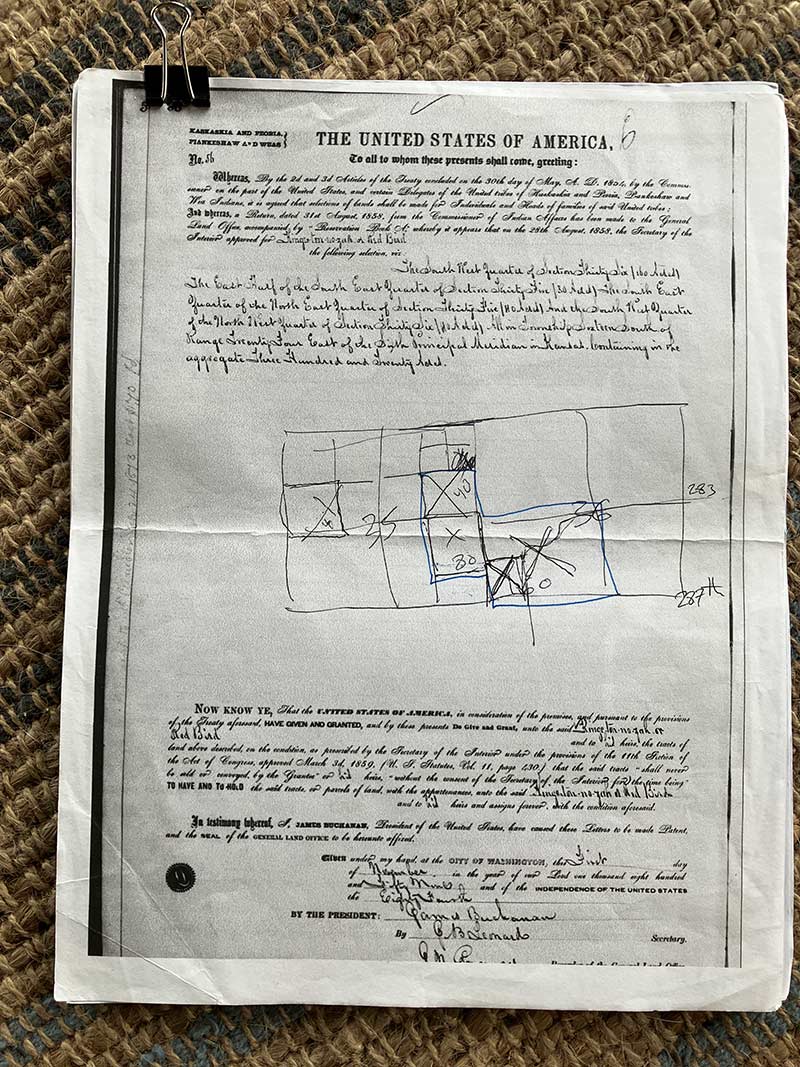 Original land grant document, 1854
In 1854, President James Buchanan signed a federal land grant conveying this ground to Kinge Toh No Zah — a member of the Wea Nation whose name, translated from the Miami-Illinois language, means simply: Red Bird.
The Wea were a confederate people of the Miami Nation, whose ancestral territory covered much of what is now Indiana, Illinois, and northeastern Kansas. Kinge Toh No Zah's grant was one of thousands issued during the treaty era — but the name he carried has outlasted every subsequent owner of this land.
When the current owners chose to restore the property's original name, they weren't inventing a brand. They were reading a document that had been sitting in a drawer for over a century, and deciding to tell the truth about where they live.
The original land grant document, hand-lettered with a section map, remains in the possession of the current property owners. It is the founding document of Red Bird Ranch.
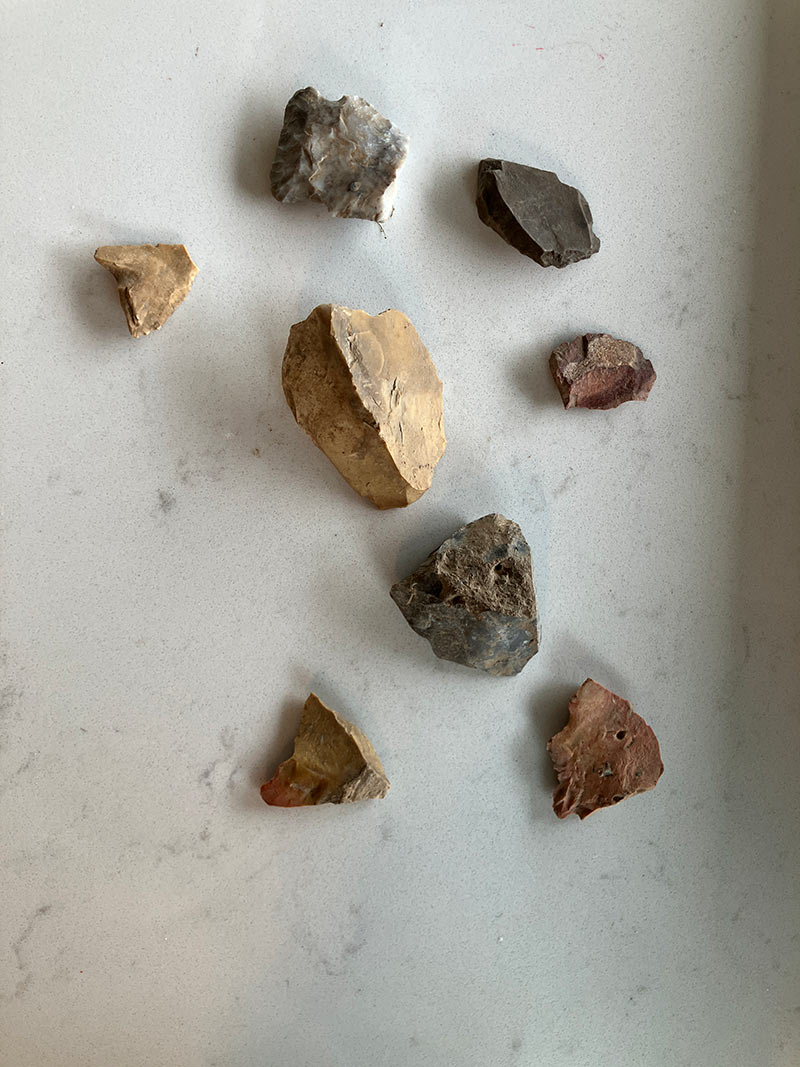
Long before the 1854 land grant was written, the Wea people and their ancestors lived on this land. The flint arrowheads and stone tools found across the property are their record — older than any document, unmoved by any transfer of title.
These objects were not brought here. They were made here, used here, and left here by people who understood this land far better than any survey could capture. They surface occasionally still, turned up by rain or by the plow — small, precise, and quietly astonishing.
They are kept with care. They are not for sale, not for display, and not for casual handling. They belong to the land that produced them.
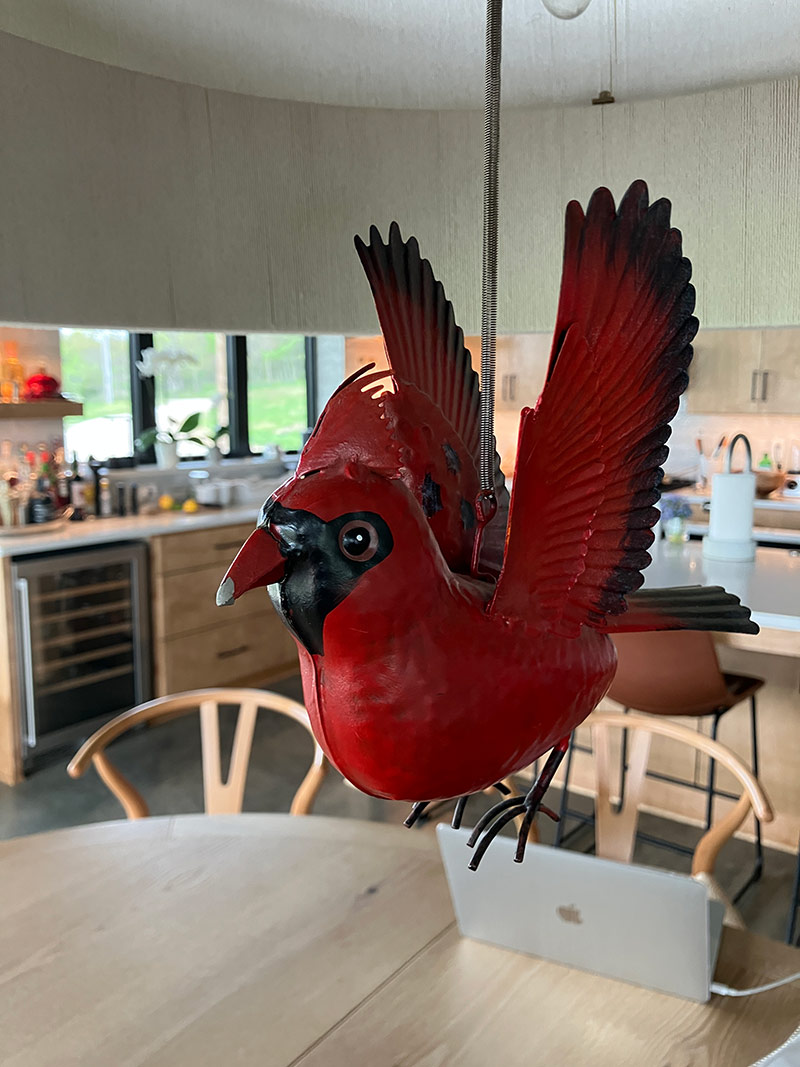
The northern cardinal is common across Kansas — but at Red Bird Ranch, it carries a specific and unusual weight. Every time a guest sees the red cardinal sculpture turning slowly in the dining room, they're looking at the same emblem that named a man who owned this land in 1854.
That continuity — from a Wea man's name, to a federal document, to a carved wooden sign on a cedar gate — is what makes this property unlike any other. The brand didn't create the story. The story created the brand.
Wea Nation presence
The Miami-Illinois speaking Wea people inhabit the grasslands and river corridors of eastern Kansas. Their campsites, hunting grounds, and travel routes cross what will become Red Bird Ranch. Flint tools worked from local chert deposits remain in the soil to this day.
The Buchanan Land Grant
President James Buchanan signs the federal land grant conveying this ground to Kinge Toh No Zah — Red Bird — of the Wea Nation. The hand-lettered document, complete with a hand-drawn section map, establishes the legal origin of the property and the name it still carries.
Working farm, Miami County
The land passes through generations of Kansas farming families. Crops are planted, harvested, and replanted. The rolling terrain is shaped by decades of tillage and grazing. Through every change of ownership, the ecological character of the land — its wetlands, its woodland edges, its creek corridors — persists.
Conservation easement — Ducks Unlimited
Current ownership partners with Ducks Unlimited to place 61 acres under a permanent conservation easement. The wetland corridor, pond systems, and riparian habitat are protected in perpetuity — ensuring that what makes this land exceptional cannot be subdivided or developed, by any future owner, ever.
Red Bird Ranch opens
A purpose-built lodge is constructed with the property's history in mind — dark board-and-batten exterior echoing the working farm aesthetic, white-oak trusses and glass walls framing the land it sits within. The name is restored. The gate goes up. The cardinal hangs in the dining room. Red Bird Ranch opens.
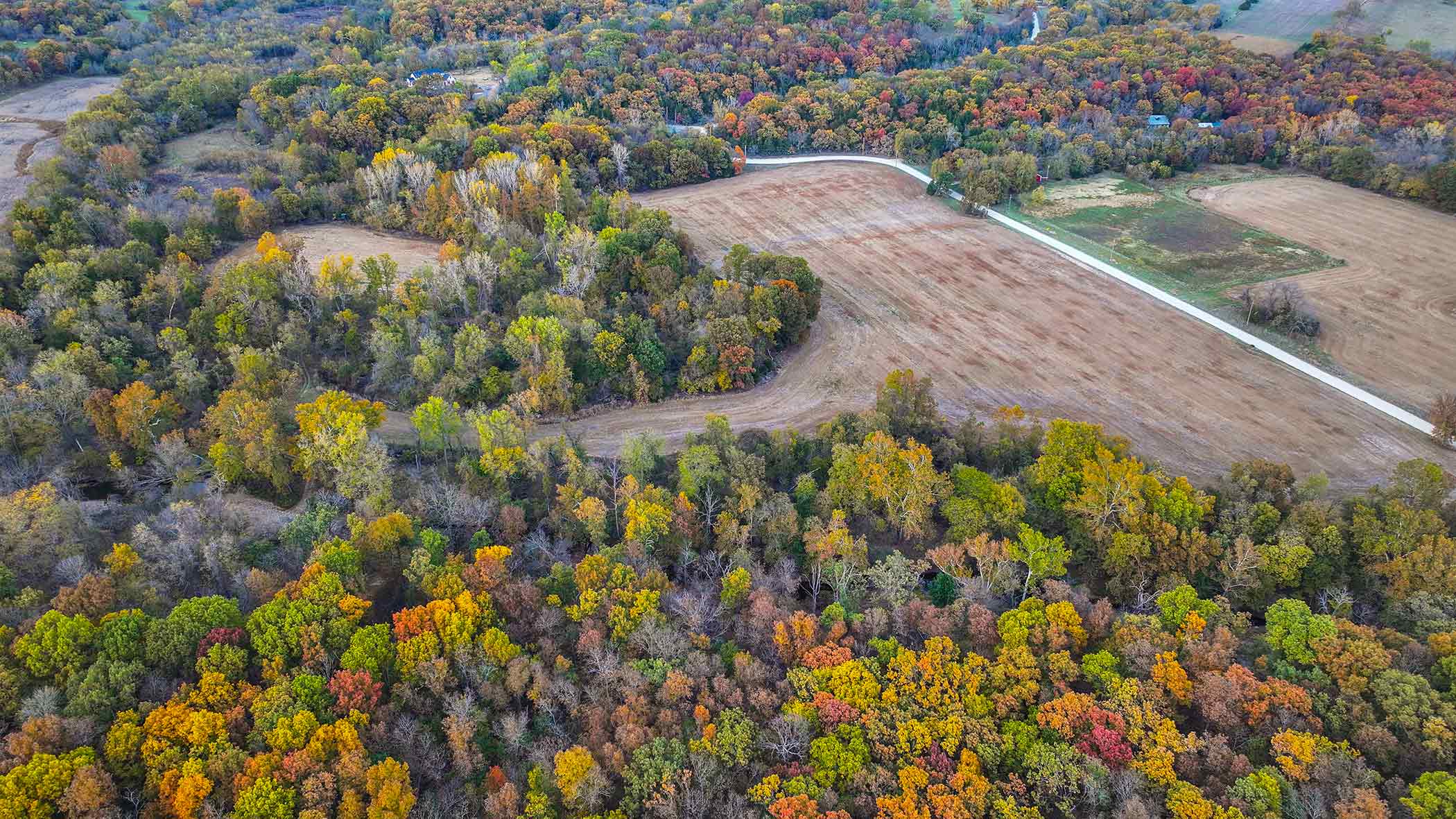
The conservation easement that covers 61 acres of Red Bird Ranch is not a marketing point — it is a legal instrument that permanently limits what can be done with this land. No development. No subdivision. No compromise. What you see from the porch today is what will be there when you come back.
Red Bird Ranch accommodates groups of up to 12. The property books exclusively — your group, your stay, your experience of 170 years of the same land.